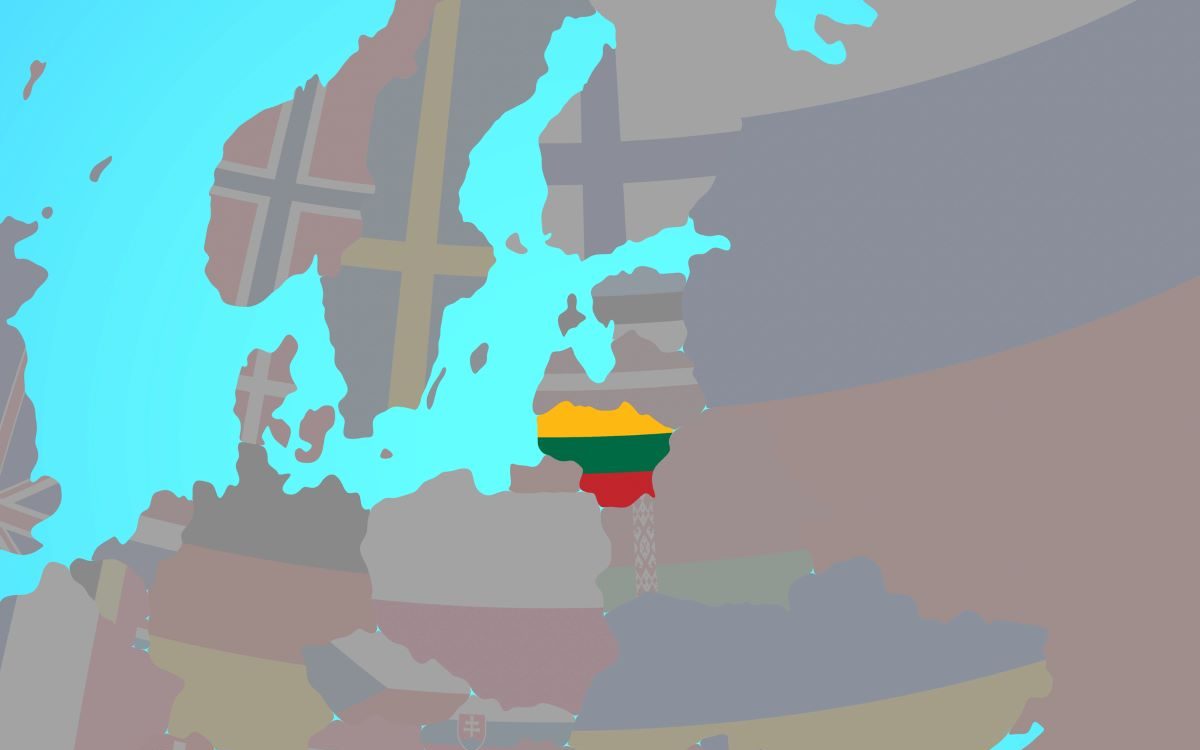
Lectures by Prof. Tomasz Blaszczak on Contemporary Lithuanian History

The entire UniTS university community is invited to attend the lectures by Professor Tomasz Blaszczak from Vytautas Magnus University in Kaunas, Lithuania. Professor Blaszczak is a contemporary historian and will give two lectures:

  • Monday, 12 May, from 12:00 to 14:00 in Room B, Androna Baciocchi (Prof. Catalan’s course):
    The development of the Lithuanian-Belarusian border: Soviet Legacies and New Divides
  • Tuesday, 13 May, from 15:00 to 17:00 in Room C1, Androna Baciocchi (Prof. Foi’s course):
    Constructing Modern Lithuanian Identity: Politics of memory in Interwar Lithuania

The lectures will be held in English.

T4EU Chair Programme Call

A new call for The T4EU Chair Programme in now open. Lecturers from T4EU Alliance universities can apply until October 14th.

A Transform4Europe Chair is a teaching position on a subject relevant to the Alliance’s priority focus areas:

  • Societal transformation, community building and inclusion
  • Digital transformation and smart regions
  • Environmental Transformation and sustainability

See the specific conditions of each university in the call for applications.

The application has to be submitted both to your home University and to the host University of your choice.

Find out more

T4EU Professional Development Training

The Transform4Europe Alliance invites academic and non-academic staff of partner universities to join the Professional Development Training. The webinars that will take place from September to November 2024
Registration is now open for September courses:

Team Building and Conflict Resolution (for non-academic staff)
September 16, 12.00–14.00 CET. MS TEAMS.
Lecturer : João Matos, Universidade Católica Portuguesa
Description: The webinar will help participants recognize that conflicts aren’t always something negative to be avoided at all costs. In fact, conflict can have a positive aspect, potentially leading to increased productivity, a deeper understanding of the other party’s interests, and improved communication.

AI-driven Innovations in ICT-based Education (for academic staff)
September 18, 14.00–16.00 CET. MS TEAMS.
Lecturer: Vigilija Žiūraitė, Vytautas Magnus University.
Description: Participants will gain valuable insights into how AI can create personalized learning content and how ICT tools can be seamlessly integrated to enhance teaching and learning across different subjects. The seminar will explore practical strategies for developing interactive, adaptive learning environments and boosting student engagement and outcomes through the innovative application of AI and ICT.

Artificial Intelligence tools in practice (for non-academic staff)
September 25, 9.000–11.00 CET. MS TEAMS.
Lecturer: Albena Antonova, Sofia University St. Kliment Ohridski.
Description: This webinar offers a brief overview of general theoretical models, highlighting the benefits and challenges associated with AI tools. It then presents various practical examples of how AI can be applied to improve administrative efficiency, data analysis, and communication. Additionally, the webinar explores how AI can enhance communication through personalized outreach, social media management, and language translation services.

Artificial Intelligence Tools for Innovative Teaching (for academic staff)
September 27, 9.00–11.00 CET. MS TEAMS.            
Lecturer: Augustinas Balaišis, Vytautas Magnus University.
Description: This webinar will introduce essential artificial intelligence (AI) tools that can be utilized in innovative teaching methods. Participants will discover how to effectively incorporate these tools into their teaching practices. The lecturer will showcase how AI tools can be leveraged to create interactive and personalized learning experiences.

Bachelor level courses for the 2024-2025 academic year

Dear students of the University of Trieste,

The T4EU Course Offer at Bachelor Level for the 2024-2025 academic year is now available!

From September 2024 you will have the opportunity to attend the online courses at Bachelor level offered by Transform4Europe partner institutions in the following educational fields, promoted by the Alliance:

SPECIALIZED MODULE COURSES

  • Digital Transformation,
  • Environmental Transformation,
  • Societal Transformation.

CORE MODULE COURSES

  • Knowledge Entrepreneurship,
  • Languages & Intercultural competencies,
  • European history, politics, culture, law, economy.

Join the opportunity to improve and enrich your academic experience incorporating a European-oriented course programme that leads to a certificate with up to 24 ECTS – into your studies.

Consult the list of modules and the complete course offer

Fill in the registration form, making sure you meet the deadline set by each partner University.

IMPORTANT!  Before you attend the selected course/s, remember to inform your “Coordinatore del Corso di Studi” and the “Segreteria didattica” of your Department, following the dedicated guidelinesFailure to do so will result in an impossibility to recognise your ECTSs.”

T4EU Regional Heritage Workshop: call for papers

Call for papers: Between Contestation and Proclamation: Cultural Heritage in Border Struggles and (Cross-)Border Alliances.

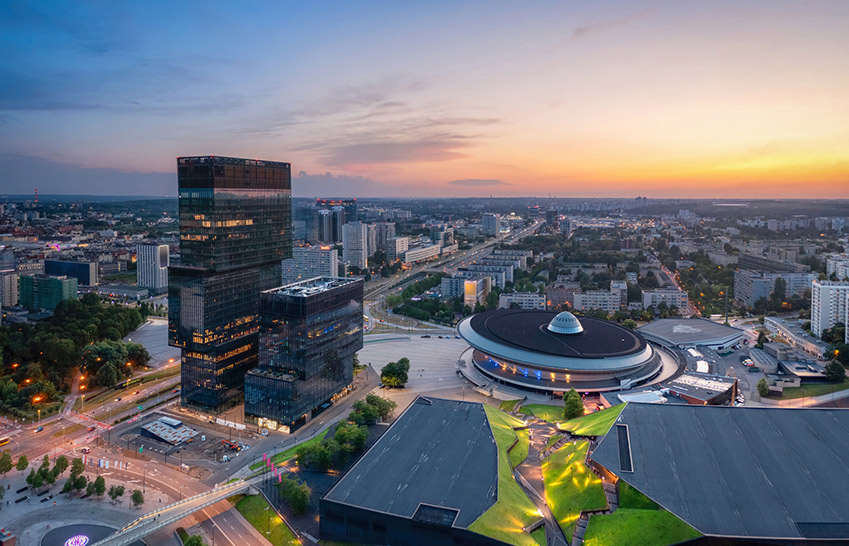
On 17-18 October 2024, Saarland University (UniGR-Center for Border Studies), in partnership with the University of Katowice (Silesian Center for the Study of Regional and Transborder Memory) and the University of Trieste (CRMCS – Centro di Ricerca sulle Migrazioni e la Cooperazione allo Sviluppo) will host the T4EU Regional Heritage Workshop on issues of cultural heritage in contexts of border struggles and (cross-) border alliances.

By questioning the assumption of the prerequisite of common heritage in border contestations, contributions may highlight how cultural heritage both incites and results from border conflicts and cooperative efforts.

Heritage often becomes a contested terrain, where claims to historical and cultural continuity fuel geopolitical disputes and migration-related struggles. Simultaneously, shared (or proclaimed) heritage can be a powerful catalyst for cross-border alliances, fostering collaboration and peace-building initiatives. This dual role of heritage underscores its complexity: it serves as both a divisive force in border conflicts and a unifying element in transnational cooperation.

We welcome submissions for panels (up to three papers) and individual papers (20 minutes maximum), as well as workshop and roundtable proposals. Please submit your abstract (300 words maximum) and a brief bio-bibliographical note to  borderstudies@uni-saarland.de by 4 August 2024.

Contact: Eva Nossem, e.nossem@mx.uni-saarland.de